Archive for May, 2020

A Review of the First Novel I’ve Never Written

May 31, 2020


A novel does not have to be chronological nor does it have to proceed logically from one thought to another. It doesn’t have to grip the reader with fast action and suspenseful moments nor does it have to speak to some of society’s underlying conflicts or paradoxes. It doesn’t have to have a convincing story to tell where the narrative becomes increasingly evident and powerful. And it certainly doesn’t have to have brilliant and subtle descriptions of people and their utterances calling attention to insights that can be shared across many life spaces and varieties of experience. It doesn’t have to offer musings by the author on the many layers of meaning contained in the narrative. Nor is it necessary that the narrative contain many layers of meaning. And although it could touch many feelings that could be shared across the human community, it doesn’t have to.

This novel didn’t do any of these things, but it didn’t do anything else either! Therefore my congratulations to the author for these ingenious acts of avoidance, leaving us with a manuscript that has no artistic, historical or imaginative value whatsoever.
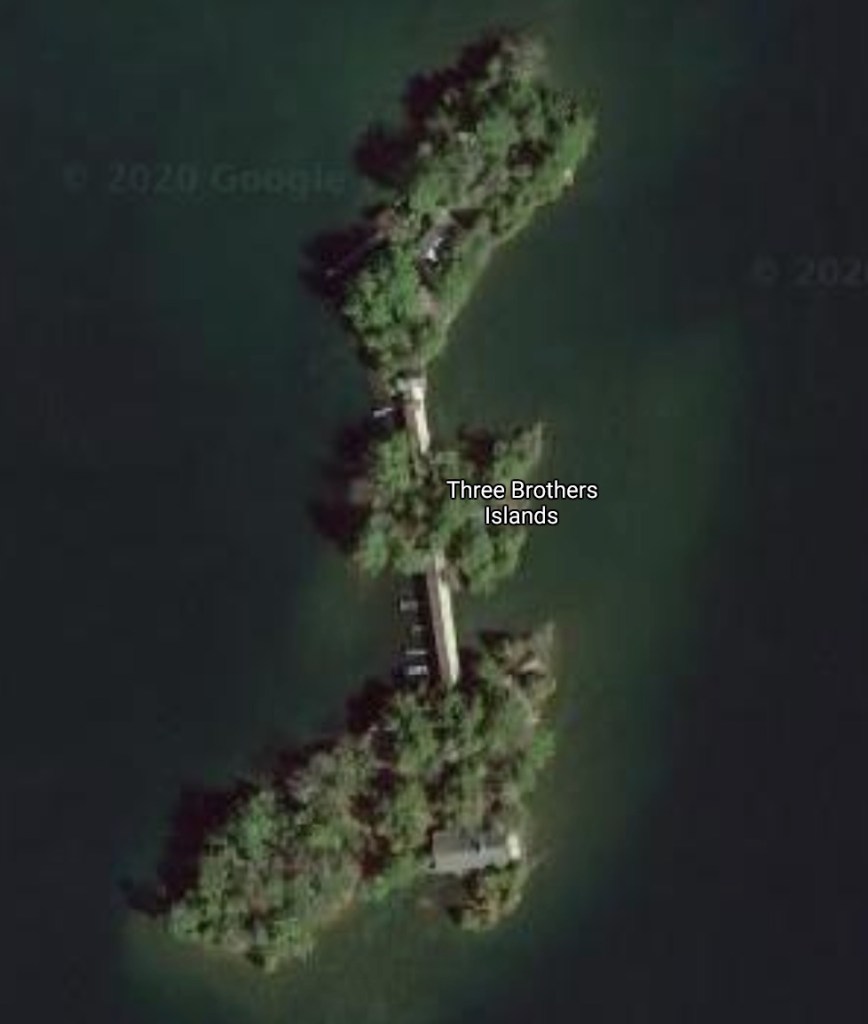
A Small Boy

May 25, 2020

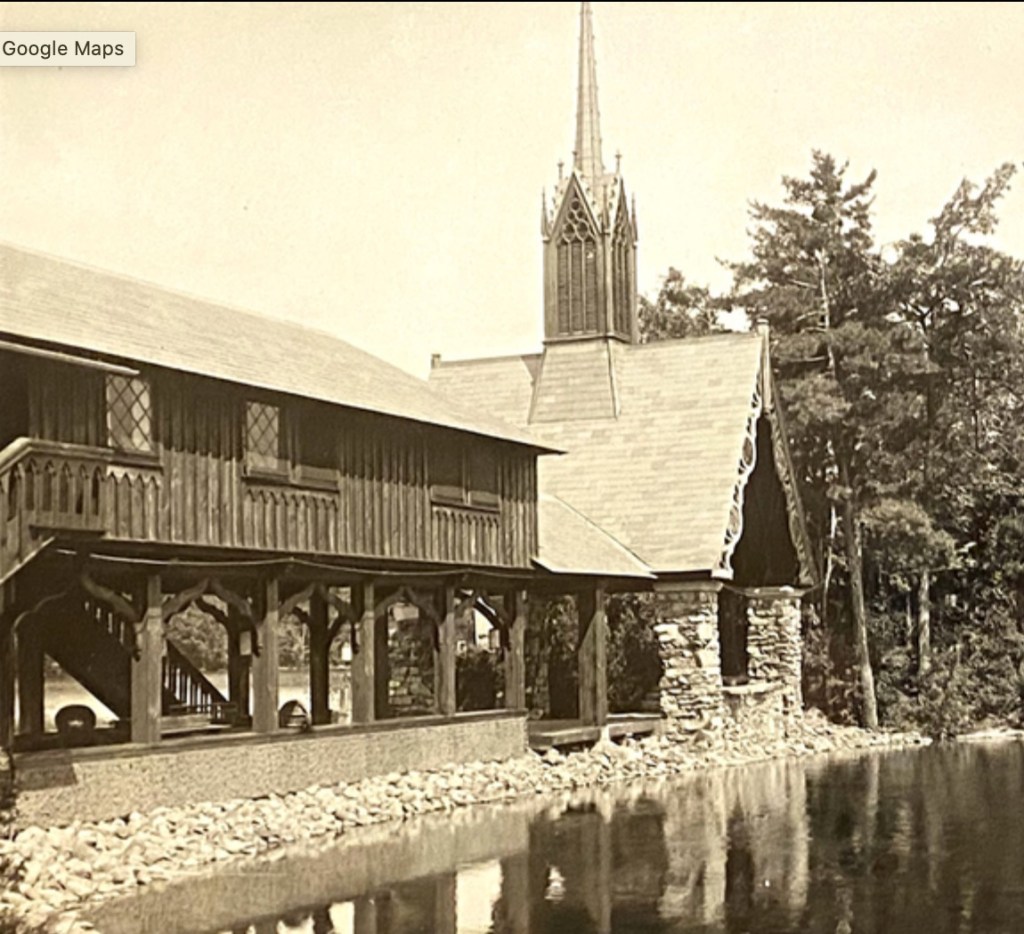
A small boy on a tricycle on Triuna
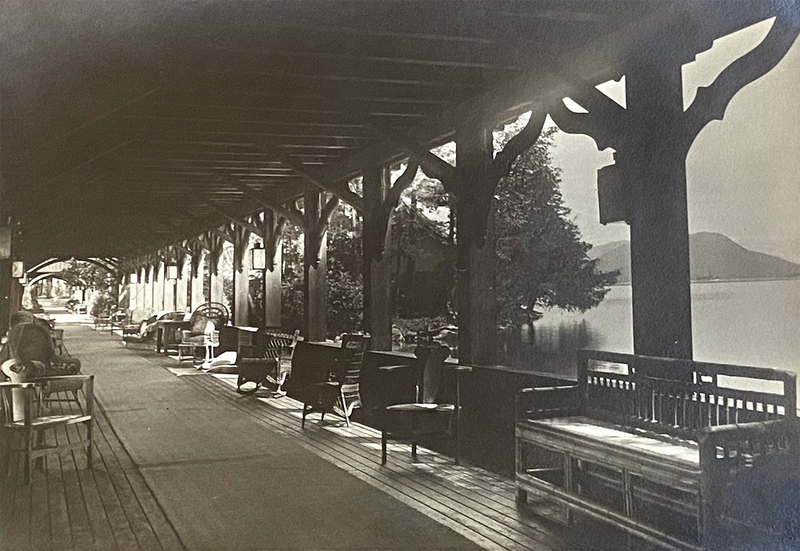
Peddling along a wooden passageway
Overlooking the lake
To the mountains beyond.
It led me to places
Outside my parents’ realm.
No longer was I “home.”
This linear connection
Allowed for safe adventure.
But for a small child some risk!
Propelling myself away from the comfort of family objects and people
With distant mountains and a vast body of water to the side
Bridging rubble and water below
Yet the passageway was reassuring
Containing the bric-a-brac of use
If not people engaged in some activity or another.
But most memorable
From those self-propelled adventures
Was solitude.
Within the seemingly endless passageway
Its tenuous claim on the structure to which it clung
In the vastness of the surrounding landscape.

Triuna

May 25, 2020

Triuna — a bit of history

The Spencer Trask family in 1906 owned the Yaddo estate. They wanted to expand but not with another estate. They bought the Three Brothers Islands. Mrs. Trask was the instigator and visionary for linking and making the three islands habitable, renaming them “Triuna.” They bought tons of stone walls and rock from the farmers who, by the way, appreciated the income, as that was greater than what they were getting from their crops. They moved the stones over the ice and placed them to link the islands. Mrs. Trask outlived her husband and married George Foster Peabody in 1921. They sponsored festivals of artists each summer during into the 40s. The artists lived in Triuna during the 30’s and commuted over the water to Yaddo for performances and exhibitions. Quincy Porter, my father, had been teaching at Vassar College and was invited to be part of the Yaddo festivals in the late 30s and 40s. He offered his compositions played the viola, and my mother, Lois, played the violin. My father also brought good recording technology to the festival and made some of the early recordings of many contemporary American composers whose work was performed at Yaddo during the festivals. My parents must have taken me with them in the late 30s when I was three, four and five. After the Peabodys Triuna was sold to the Swire family that still occupies it, but it no longer is related to Yaddo. The name of the islands has reverted to “Three Brothers Islands.”

Patience

May 16, 2020

One can simply wait,

Or shift from ordinary gait,

But if not welcomed

Or even accepted

Only adds to the angst

Or seems like pranks

One can keep doing

As part of pursuing

Increasing the expectation

Of revelation

From the world one knows,

Even looking beyond to where the wind blows

One can reach around

Where patience is now found

To find new places

Where patience might create spaces

That invite exploration

And reformulation.

One can try to assemble

With things that resemble

But are not the same

As things we can name

To modify the meaning

Of being-in-place

Lynn

May 13, 2020

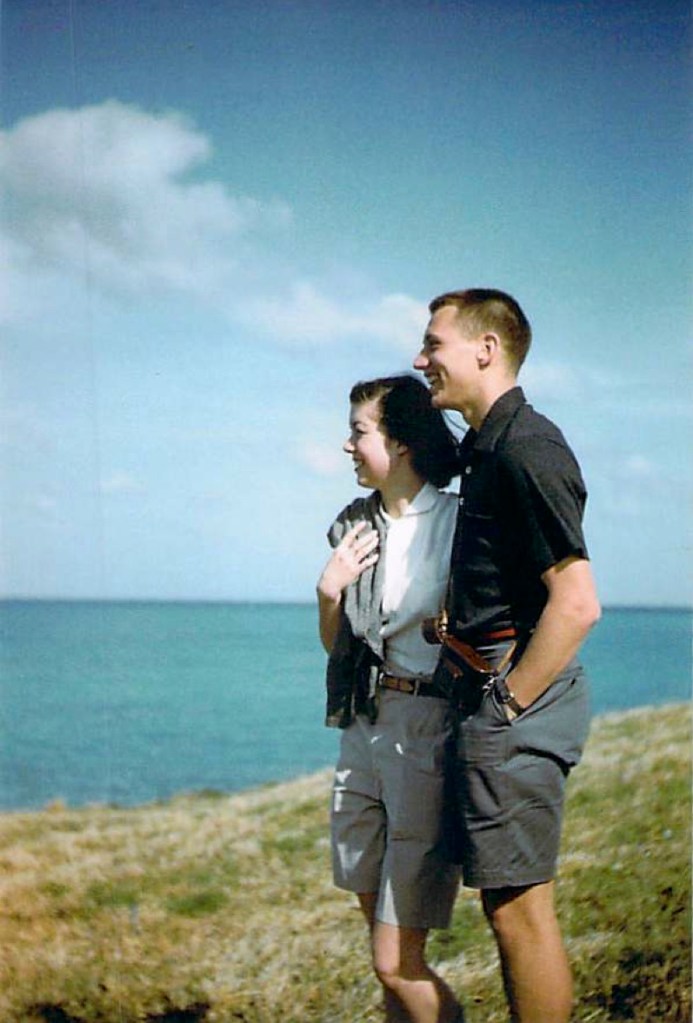
Lynn never said she’d marry me.

She somehow was so much with me

There was no point speaking of it

Much of our life was that way

I understood it too little

Still don’t

But there never were better moments

Than looking at the same things

In our own ways

Silently sharing.

Reply to Aaltoe from Hoot

May 11, 2020

Dear Aaltoe,

You noted the relatively optimistic tone of Pablo’s reply. But it was more than that. He called on you to see that, despite changed external conditions that restrict us in many ways, our inner resources that we can draw upon, if only we would notice them, had expanded. One might argue that there is a reciprocity between the two but pessimism blinds us from seeing our potential inner resources and dampens our initiative to define ways to exploit and develop them in order to address the changed world. Indeed, Aaltoe, it is a creative path to follow: to notice these inner resources, with them to form new and powerful ways of addressing the changes, and to move beyond coping to divining new skills, outlooks and ways of being. Perhaps you’ve noticed, Aaltoe, that I seem to be suggesting things that are at the limit of your vision: openings to the future, some paths to follow, some extraordinary views that will progressively be revealed. Not to tease you, but it will take effort at re-seeing yourself and an integration of that self with a being-in-the-world. Well enough for now, you have a lot to do before what I tell you next will make much sense.

Your only,

Hoot

Reconstituting Self–another note to Hoot

May 10, 2020

Dear Hoot,

It’s not hard to see reconstituting myself as difficult given the multiplicity of roles I’ve played over the years and the absence today of the obligations that those roles imposed. Almost every episode in my life contained several, sometimes overlapping, each offering its own activities intrinsic to that role, social definitions of and labels for it, narratives that could be constructed around it, with associated purposes, larger goals, and specific activities to constitute an actual being-in-action. As a function of each role there was automatic membership in some larger community and automatic differentiation from others, all serving to define the “self“. There are aspects of self that emerge sometimes so powerfully as to exceed social definition as the driving force. Think of van Gogh and Picasso and, for that matter, of any artist who expands the limits of what “self” can be, but in these lives, there was not the multiplicity of roles and concomitant demands of each.

Why should there be any problem in reconstituting self today? Well, along with the many roles, professor, architect, husband, father, Dean, housemaster, there were widely varying, sometimes competing agendas and priorities. And there were the inevitable distractions and even delusions. The opportunities of some roles and the limitation of others invited deeper engagement or escape resulting in trade-offs and competition among alternative courses of action. At best there was some measure of success; at worst turmoil and confusion sometimes leading to self-destructive behavior. However, this was the complex life I – and so many others led. And that is not my life today.

By restricting the range and types of action and especially interaction, the plague has simplified the world of opportunity. Most ruthlessly it has drastically reduced the number and type of socially defined roles I play and might play. Of course, age and the fact of retirement are critical factors as well. The combination is brutal. Restrictions derive, though, not just from the combination of these factors but from the lack of models for self-development in my highly structured career. And there is no set of external circumstances comparable to this plague in my lifetime except, perhaps, WWII; but even then the threat was neither immanent nor personal, daily life was not so disrupted, and I was very young, taking great pleasure in the identification of airplanes and walking in the woods. Hoot, I remember hearing you there!

best,

Aaltoe

Note to My Friend, Hoot Owl

May 6, 2020

Dear Hoot,

I’m writing you because I thought you’d listen, and I know you’d understand. There is no broken chain of reasoning that I can repair, no emotional crisis that I can probe, no frustrated plan to redesign, no obvious problem to attempt to solve. Why am I unsettled, discontented, unable to focus on something worth doing? Can it be that I’ve been housebound since March 13? Can it be that our prevaricating national leadership refuses to listen to and follow the advice of experts? Can it be that a sizable portion of the population is vulnerable innocently and another portion is in flagrant violation of sensible norms of behavior, some using the situation to exploit social differences and to push extremists’ ideologies? Is it possible that our democracy is under such attack that we may never experience it again in the same ways?  That mobs of different sizes and strength may rule at different places and levels in our society without the checks and balances of common decency, acceptable norms of behavior, and measured interpretation and enforcement of law?

Hoot, I’m worried. 

Aaltoe

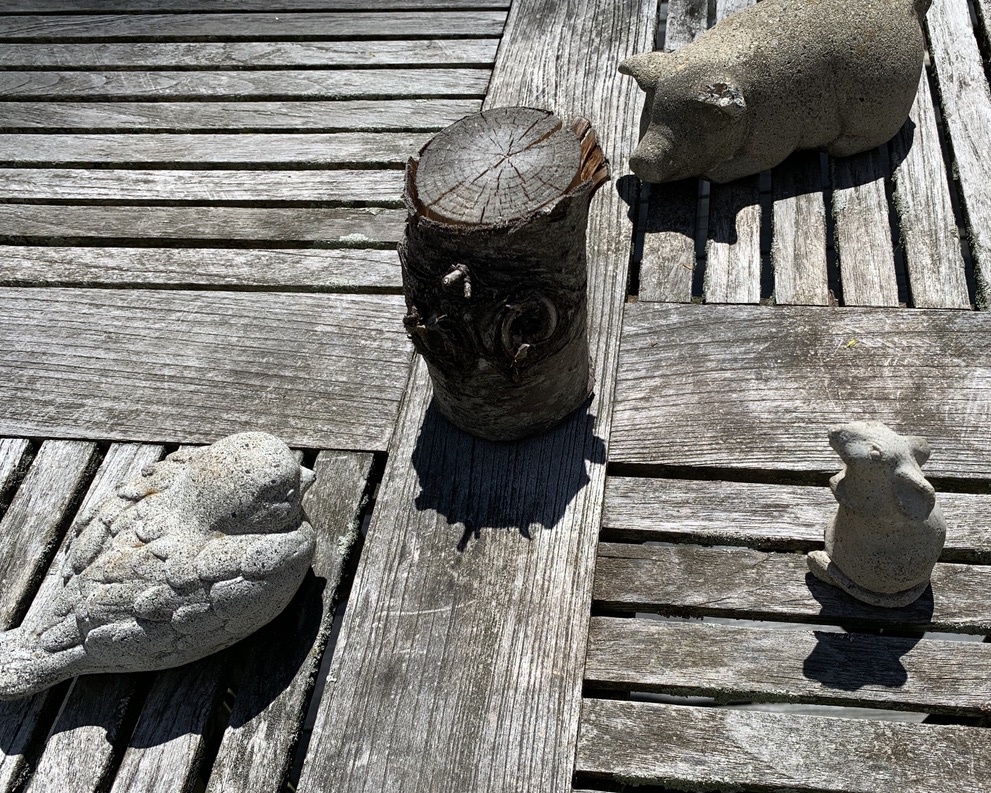
3 Animals on a Table

May 5, 2020
A picture containing wooden, bench, fence, outdoor

Description automatically generated

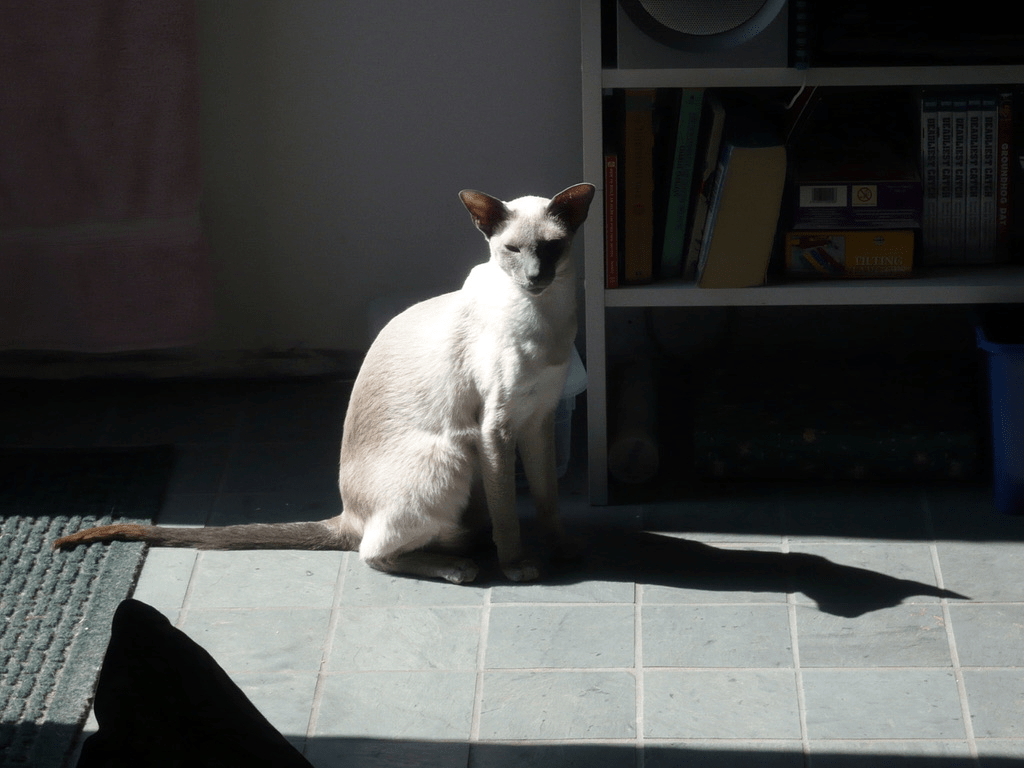
A pig, a bird and a mouse,

Around a hint of a tree—was it Birch?

None to be left in the lurch

They all know they’re near the house.

They have the comfort of place

In the center of a round table

They converse as they are well able

Even though they can just see the others’ face

Topics range from far to near:

The pig explains the earth

The mouse discusses its girth

And the bird describes his family dear.

Conversation binds them close.

They grow to understand each other

Though of course they do not share a mother

No chance of becoming morose!

The next day they start again

Exploring new ideas and places

At increasingly rapid paces

Taking pleasure from their loud Amen!

What is fiction?

May 2, 2020
A picture containing old, man, covered, group

Description automatically generated
Uccello Battle of Romano

Evidence? What constitutes evidence?

Oral accounts may be deliberately or accidentally or ignorantly inaccurate.

Summaries of troves of information are partial, incomplete, and possibly in author -conjured relational structures.

How are the different parts of the report related to one another?

What is the evidence for those imputed relationships?

And how does one detect and differentiate the relational structures of the description from that of the situation being described?

Whether the written word, visual image, or recording, at best there is only partial representation, and highly selective representation at that.

That truth is stranger than fiction, even if only occasionally, pretty well discounts strangeness for sorting out the two.

But where does the fictionalization of the accounts stop?

Beyond conversation and other ephemera, the author cannot possibly know the full extent of the elements bearing on the individual’s actions and thoughts, let alone those that may be dominant.

Motivation, desire, affective state can only be hypothesized.

It is only in fiction that these things can be arguably true, where the author is describing an imagined state that is entirely of his or her creation.

Thus, only fiction can be non-fiction.